Over eighteen months, from February 2025 to July 2026, the 3DBigDataSpace project set out to answer a practical question: how can Europe's growing collections of three-dimensional cultural heritage be gathered, preserved, enriched and put to use by the people who care about them? The project, funded under the Digital Europe Programme, has now reached its conclusion, and the results go well beyond the targets it set for itself. That is a result worth celebrating !
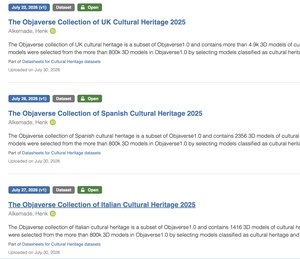
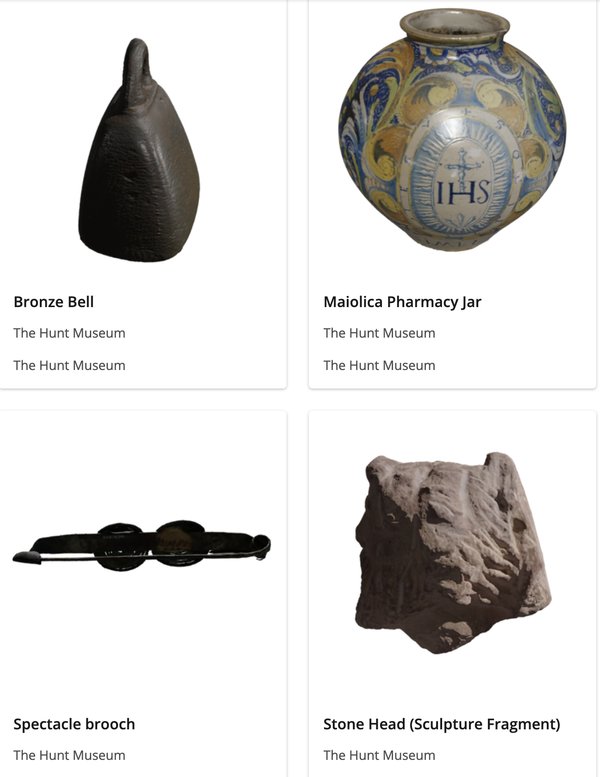
The final review by the European Health and Digital Executive Agency recognised that the consortium achieved its objectives and frequently exceeded them. The scale of the data work is the first thing to note. More than 70,000 3D models were aggregated and delivered to the common European data space for cultural heritage. Of these, more than 1,200 have been published through Europeana.eu, where they are now available to students, researchers, curators and the general public. Behind those figures lies a substantial amount of collection work. The project harvested large, international datasets, smaller regional collections, and material drawn directly from existing repositories, bringing together records that had previously been scattered across institutions and platforms.
Collecting data is only useful if it survives. One of the project's central achievements is a working pipeline that moves aggregated datasets into long-term storage at Zenodo. Each dataset was accompanied by meta-datasets describing its origin, contents and context, so that the material can be found, understood and reused long after the project has ended. The team also drew up governance guidelines based on what they learned from pushing large-scale collections into long-term storage. These guidelines are intended to help other institutions facing the same problem, and they reflect a belief that digital heritage needs durable infrastructure as much as it needs good software.
Enrichment is where the project's technical ambitions were most visible. The consortium built an AI-driven metadata enrichment pipeline that works across the collected assets. It looks up and assigns spatial information, and it links records to authority data, so that a model of a monument or an object can be connected to the wider web of knowledge about the people, places and periods it represents. This linking makes collections easier to find and more meaningful to use. In parallel, the team developed methods to keep high-resolution 3D assets usable on web platforms and in augmented reality settings, which is no small challenge when a single model can contain an enormous amount of geometric detail.
The tools produced by the project have also matured considerably. The AI metadata tools and the graphical interface accessibility components were brought to a technology readiness level of 6 or above, which means they have been validated in relevant environments and are ready for others to test and adopt. The visualisation work covered several complementary approaches: 3D model viewers for close inspection of individual objects, 4D world viewers for placing heritage in its temporal and geographic context, and augmented reality tools for bringing objects into physical space. The software and technical artefacts were released under open-source licences, so that they can continue to be developed by anyone who finds them useful.
Demonstration cases tested whether all this infrastructure could serve real audiences. The project delivered the five planned demo cases, and two of them were developed in particular depth: one focused on museum settings, and the other on digitally supported cultural routes. Together, the demo cases reached an audience of nearly 30,000 people. The review specifically highlighted the value of these demonstrations, and the consortium is now working to document their selection and evaluation more fully, so that the lessons they offer can be shared clearly.
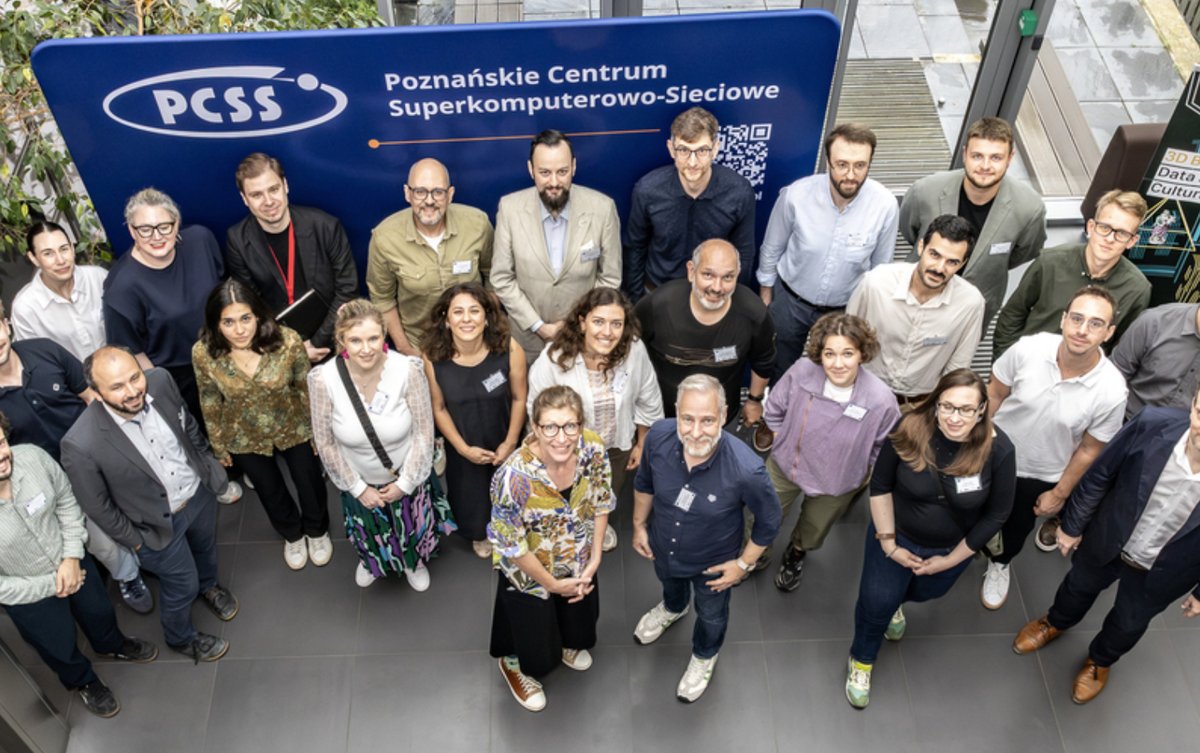
Perhaps the most lasting contribution is in education and capacity building. The project produced 20 modular training resources and four self-paced courses hosted on the Europeana Academy. Because these courses can be followed at any time and at any pace, they will continue to serve learners well beyond the project's lifetime. The team also ran three training events and summer schools, along with eight workshops and webinars. These sessions offered hands-on experience with the tools and methods, and they helped build a community of practitioners who can carry the work forward.
Communication was another area where the project went beyond its plans. A LinkedIn campaign generated more than 48,000 impressions. The project newsletter reached around 17,000 readers, and the project website recorded around 11,000 visits. These numbers matter because they show that the project was not working in isolation. It was building an audience of curators, technologists, educators and enthusiasts who are interested in what digital heritage can do.
The review also acknowledged the project's commitment to sustainability. Partners have pledged to maintain the toolkits and technical artefacts they developed, and the choice of Zenodo as long-term storage means that the aggregated and enriched datasets remain available well into the future. The results are not designed to end with the grant. They are designed to keep serving the cultural heritage sector.
The review also contains recommendations, and the consortium takes them seriously. They concern the documentation of certain deliverables, the detail provided in the technical report, the consolidation of GitHub repositories and scientific publications on the project website, and the consistent display of EU visibility elements and project references. These are the kinds of refinements that mature projects make as they close, and the team will address them in the coming weeks. They do not diminish what was achieved. They are a reminder that good science and good infrastructure also need careful records.
Looking back, 3DBigDataSpace shows what becomes possible when a community decides to treat three-dimensional heritage as shared public knowledge. Seventy thousand models are now part of a European data space. Thousands of them are visible to the public. The pipelines, tools and training materials are open, and they are built to last. The project's partners would like to thank everyone who contributed: the institutions that shared their collections, the demo case providers who tested new ideas, the learners who joined the workshops, and the colleagues who spent long hours making the technology work. The work of cultural heritage is never finished, but this project has given it a much stronger foundation.