
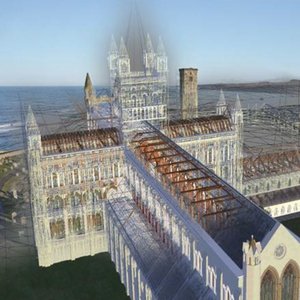
A new feature from the HERITALISE project highlights the work of the Open Virtual Worlds (OVW) research group at the University of St Andrews and their specific contributions to the European Cloud for Cultural Heritage.
The publication explores how the research group is moving beyond simple 3D digitisation to create immersive, historically accurate virtual environments that serve both research and public engagement.
The OVW group is playing a central role in several technical and narrative workstreams within the project:
A key takeaway from the publication is the group’s commitment to community-led heritage. By providing the tools and frameworks for local groups to document their own history, the OVW group ensures that the technology within HERITALISE serves a diverse range of cultural identities across Europe.
This work serves as a foundational "best practice" for how the European Collaborative Cloud for Cultural Heritage (ECCCH) will eventually host and distribute interactive 3D content.
